I finished the Beast of Big Creek Skyrace in 5:04:34, toward the back of the pack. It’s one of only a few races that made me tear up at the finish line, and I’ve been trying since then to explain why.
The Warm-Up Laps
The Beast is 24 km with 5,300 feet of climbing, up to the summit of Mount Ellinor and back down. Standing at the start, I was doing what I always do before a hard race, which is nothing at all — staying still, staying calm, saving everything I had for the mountain.
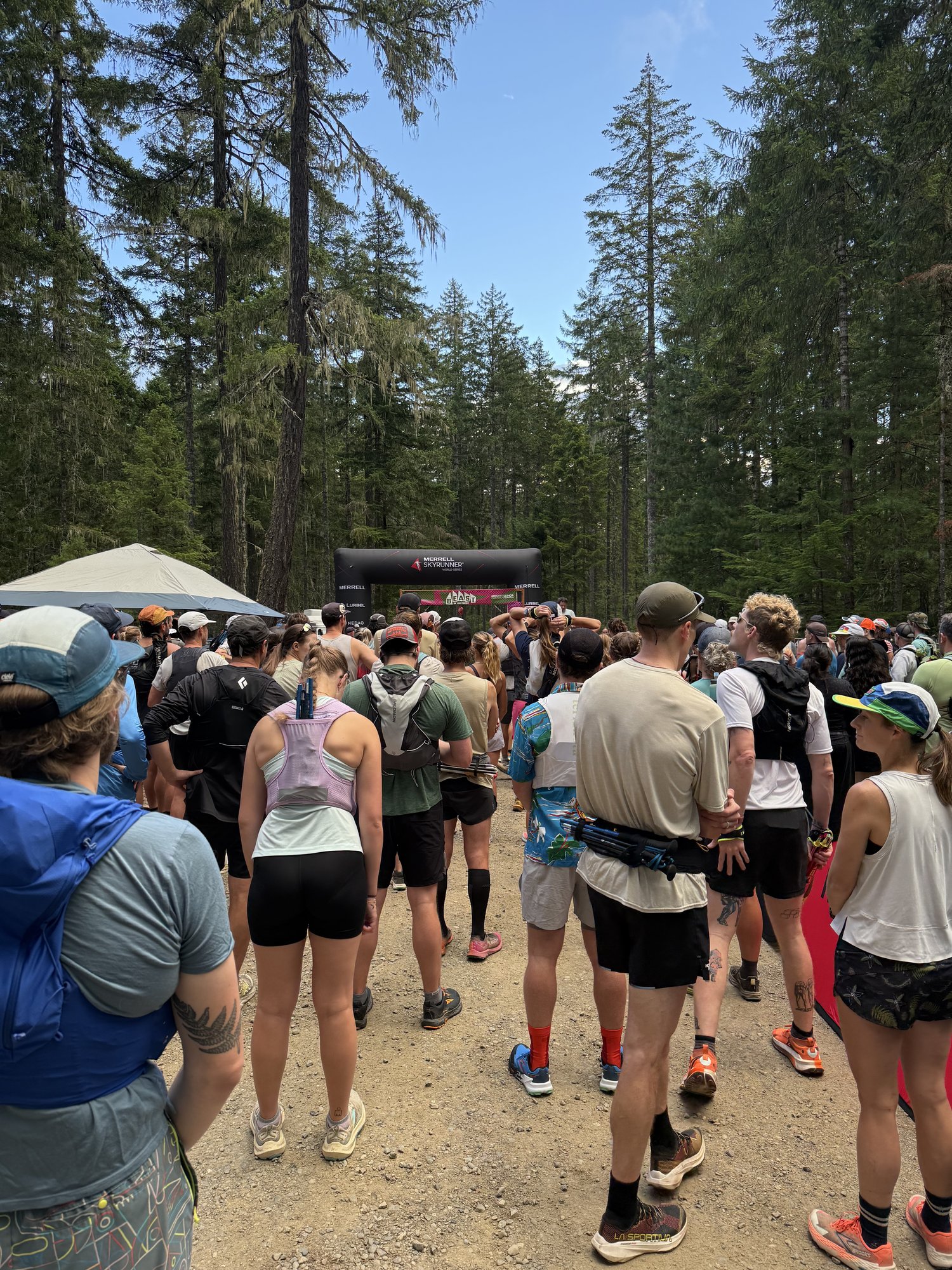
And then I noticed people jogging past me. Not walking to the start, but actually running, fast, doing warm-up laps and striding out and loosening their legs before a race that was about to take us 5,000 feet up into the Olympics.
This is the steepest race I’ve done, around 350 feet of climbing for every mile, and Broken Arrow is the closest thing to it I’ve run. And here were all these elite-looking runners getting in a serious warm-up first. It did not do much for my nerves.
Who Actually Shows Up
Hoodsport, Washington has a population of a few hundred people. It’s a small town on the Hood Canal where you’d go for oysters and a quiet weekend, and it doesn’t sound anything like an international race destination.
But the Beast is a Merrell Skyrunner World Series stop, with seventeen years of history running the steep trails up to Ellinor’s summit. So the front of the women’s race looked like this:
- Eve Pannone, GBR, team Brooks — 2:26:50
- Natalie Beadle, GBR, team Arc’teryx — 2:35:13
- Claudia Corral, ESP, team Scarpa — 2:36:15
- Carmen Graves, USA, team Merrell — 2:36:58
- Kalie McCrystal, CAN — 2:37:25
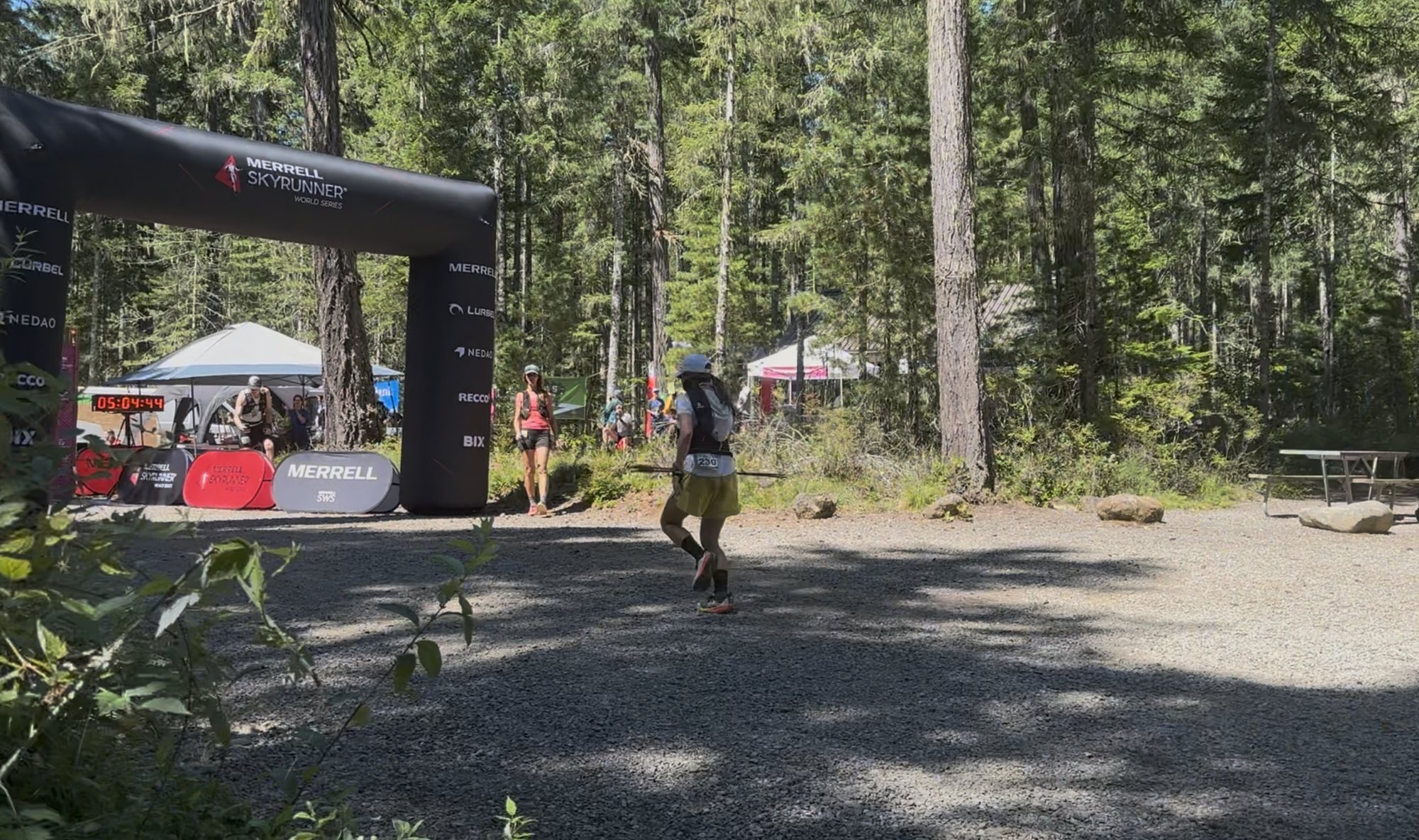
Great Britain, Spain, Canada, with Spanish and Mexican and British Columbian entrants scattered all through the field behind them. The men’s winner, Morgan Elliott, ran 2:05:27 for 15 miles and 5,300 feet of climbing, which I still have trouble picturing. These are people who run for a living, and they had come to this little town on the canal to do it.
The Climb
The course goes up, and that’s most of what there is to say about it. I filmed the section from mile 2.7 to the summit, which is the part that decides your day:
I had the grade showing on screen while I was filming, and there are long stretches sitting at 40%. That’s not runnable for someone like me — it’s hands on knees, picking a line, counting to fifty before letting yourself look up. For a good part of the climb the person ahead of me was more or less directly above my head.
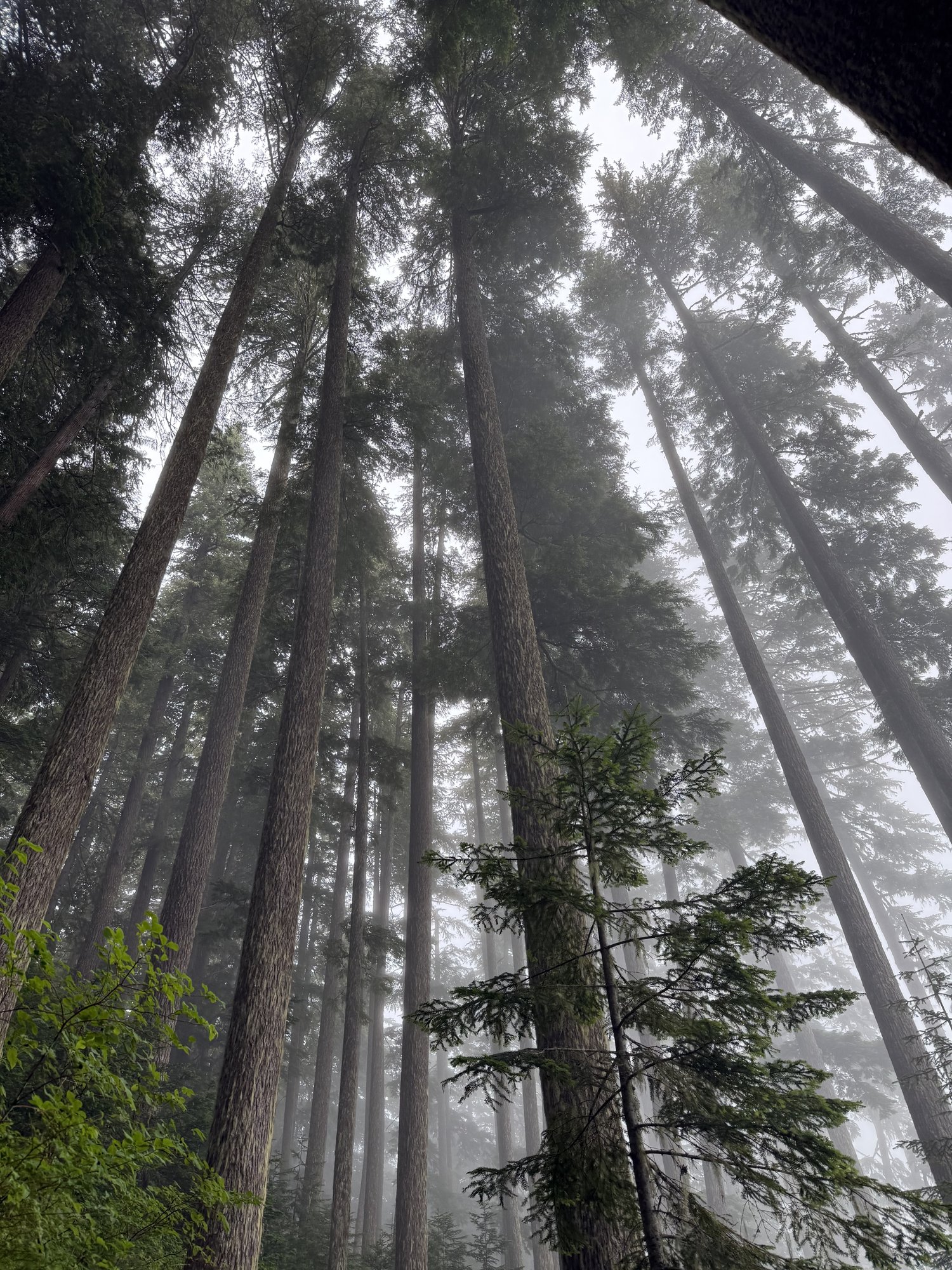
We started in sunshine down in the trees, but when you climb a mountain you don’t wait for the weather to come to you, you go up into it. Somewhere on the ascent the light went flat, the forest filled with mist, and it got cold.
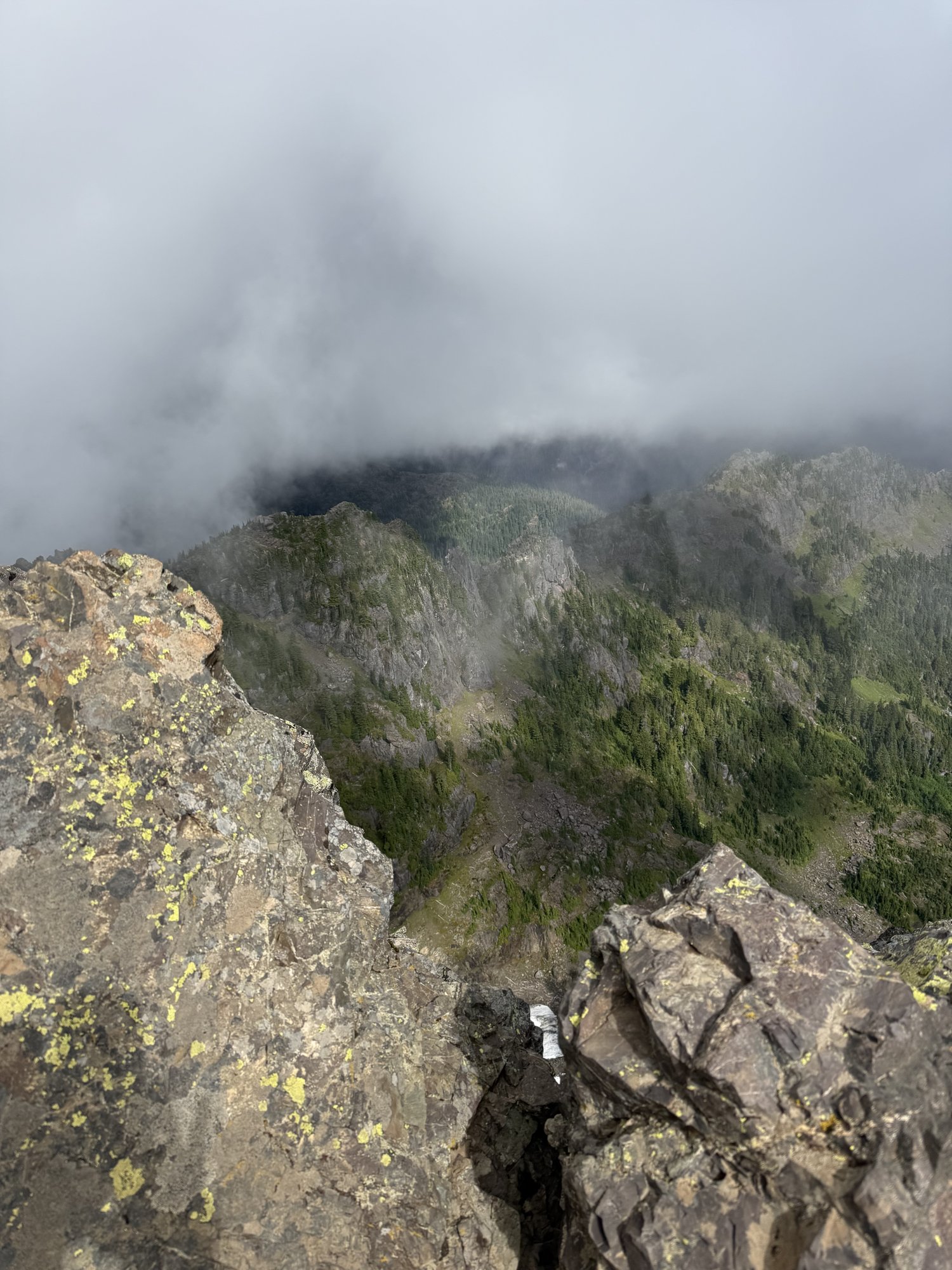
By the time the trees gave out and everything turned to rock and scree, we were climbing in and out of cloud.
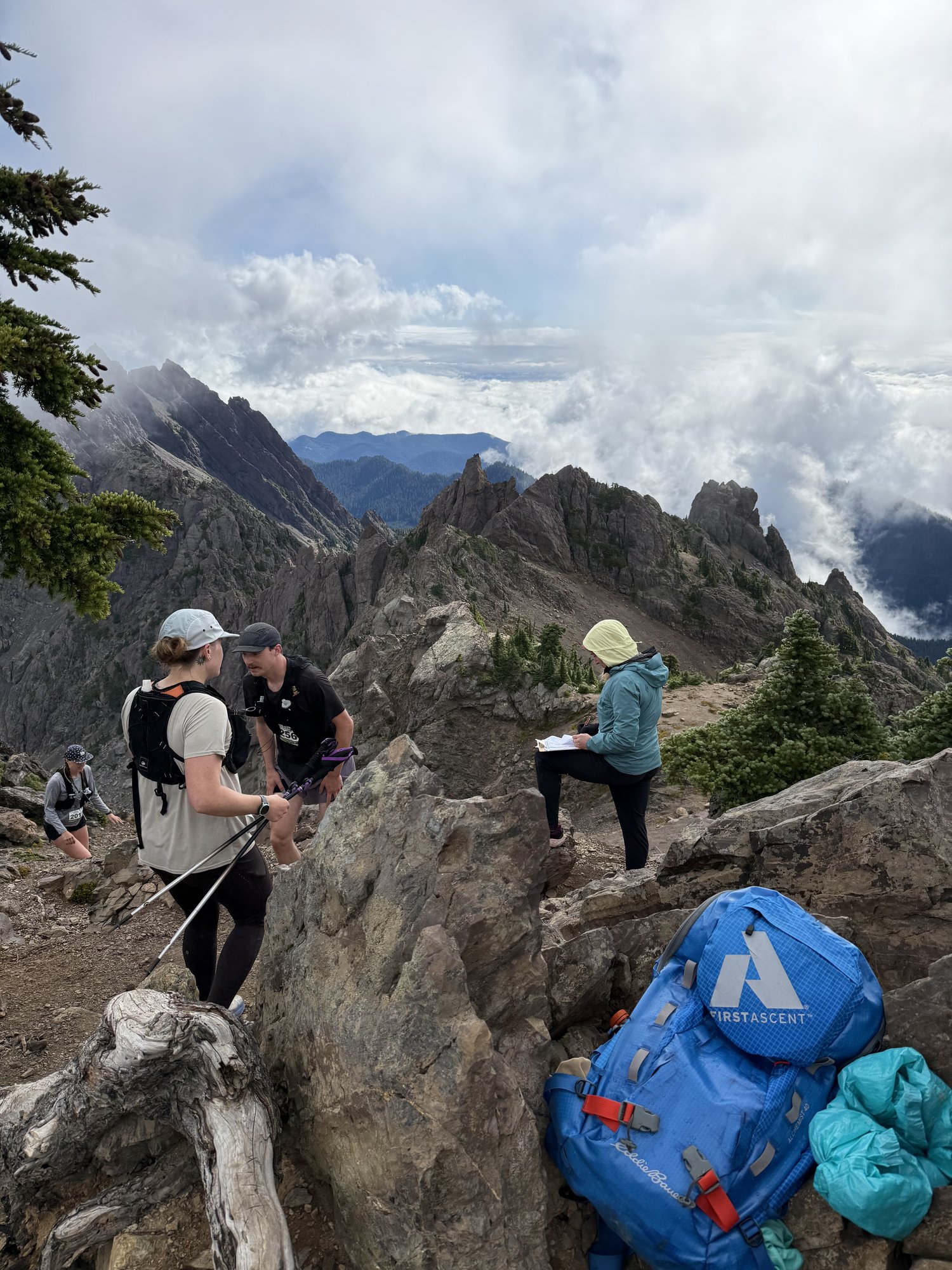
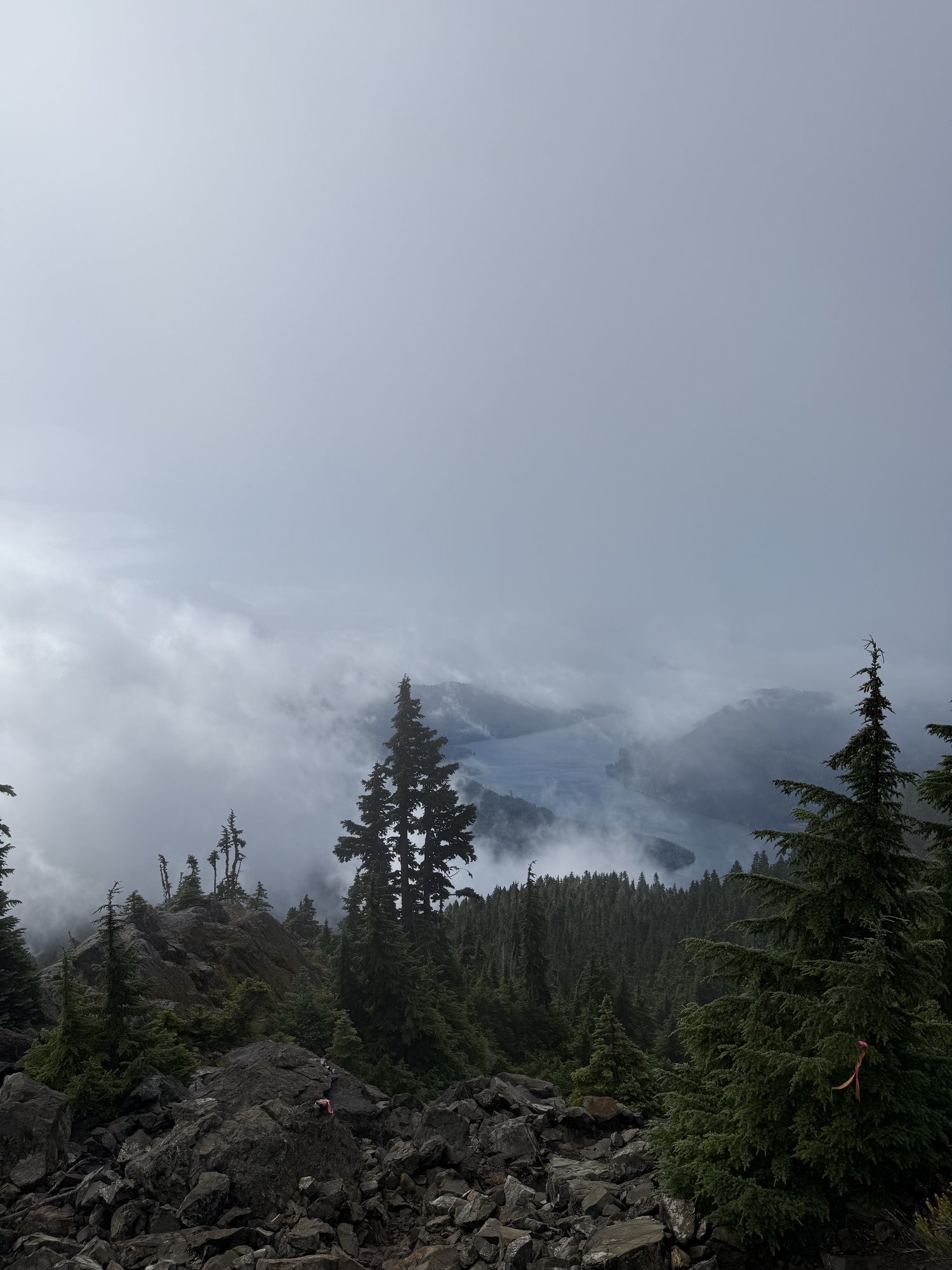
I won’t oversell the views, because we didn’t really get them. What we got instead was clouds tearing across the ridgeline and the Olympics showing themselves for a few seconds at a time before closing up again, with the Hood Canal somewhere far below under a lid of fog. I liked it more than I expected to.
Squid Legs, and the Finish
Somewhere on the way down I rolled my ankle. I got my poles under me and hauled myself back up, and then stood there for a minute doing the thing you do where you test it carefully and try to guess how bad it is. It came good again after about five minutes, which was an enormous relief, because it could very easily have been the end of my day out there.
The bigger surprise came at the aid station on the way back. I stopped, and only then did I notice what had happened to my legs. My quads were completely gone. They felt like squid legs, no bones in them at all, just wobbling around underneath me. I hadn’t registered how far past empty I was until I stood still long enough to feel it.
And I had it in my head that I needed to finish within 5 hours. So from that aid station on I pushed anyway, harder than I usually let myself push, watching my watch and redoing the arithmetic over and over the way you do when you’re tired and the numbers won’t stay still, on a descent that did not care at all what my watch said.
I came in at 5:04:34, and I teared up.
Not because of the four minutes. I think it was everything at once — how hard I’d pushed on a mountain that had already taken everything, and the relief of not having to push anymore.
My Garmin logged 15.50 miles and 5,449 feet of climbing, against the official 15 miles and 5,300, which is about as close as a watch ever gets to agreeing with a mountain course. It also put my average pace at 19:39 per mile, which tells you most of what you need to know about the terrain.
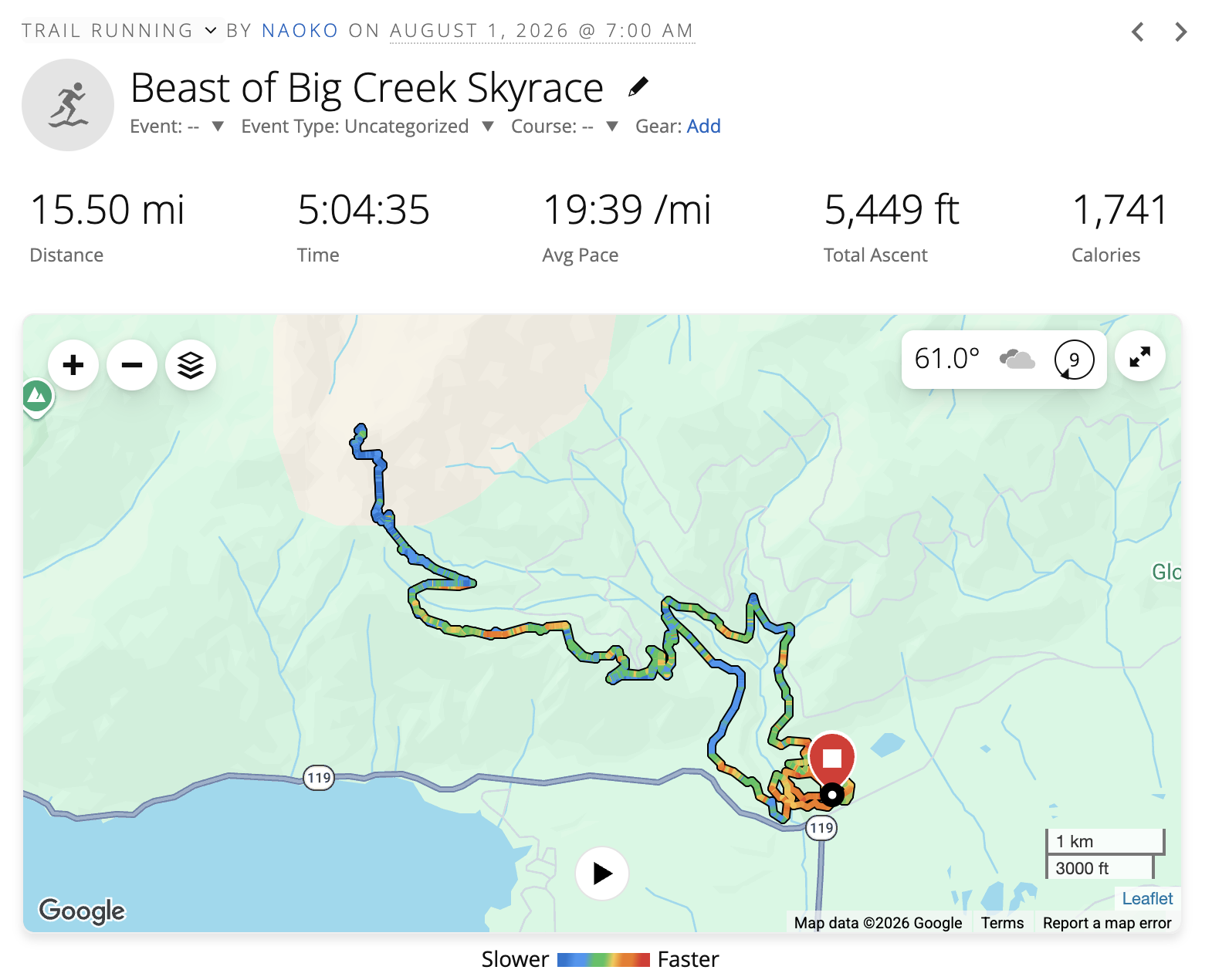
The colour on the track is pace, and it gives the whole thing away. That long blue arm reaching off to the northwest is the climb to the summit, blue the entire way, which is what a 40% grade does to anybody’s pace.
Only 3 people out of 163 starters didn’t finish. Everybody else went up and came back down.
A Note on the Results Page
Afterward I went and pulled the full results, not just the top ten, because I wanted to understand the day better.
I finished 45th out of 51 women, and 144th out of 160 overall. The median woman ran 3:32:55, and 37 of the 51 of us were under 40.
I put that here mostly because a results page is such a flat way to describe a day like this. It records where you came and nothing else, and it has nothing at all to say about the mist coming through the trees, or the ankle, or standing at that aid station finding out my legs were gone, which is what the race actually was.
Hoodsport, and the Oysters
The nice thing about picking a race in a small town is that the recovery is better than the race deserves.
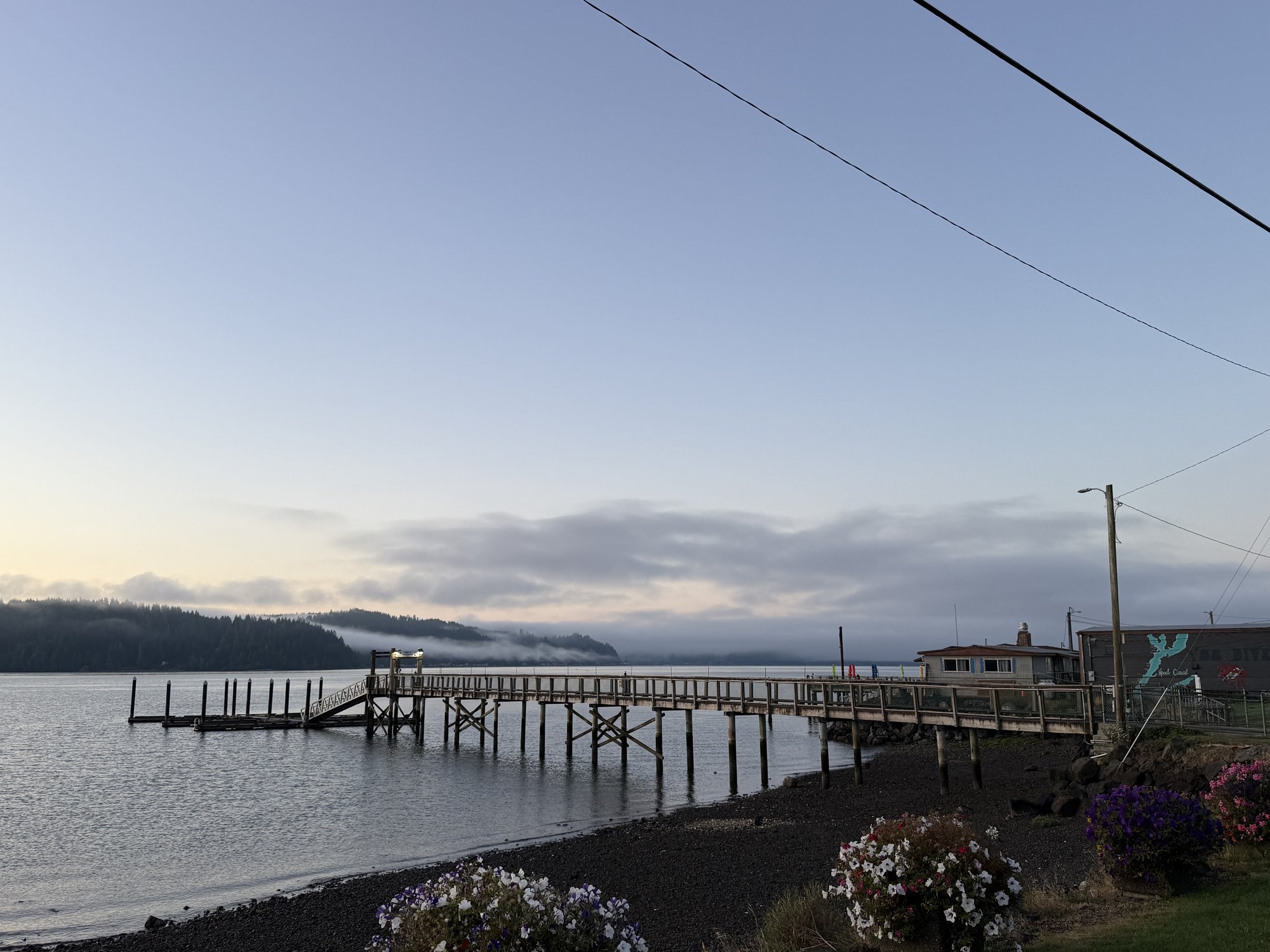
Hoodsport sits right on the Hood Canal, which is one of the great oyster places anywhere — cold, clean water, and oysters that taste like it. The town is pretty clear about what it’s known for.
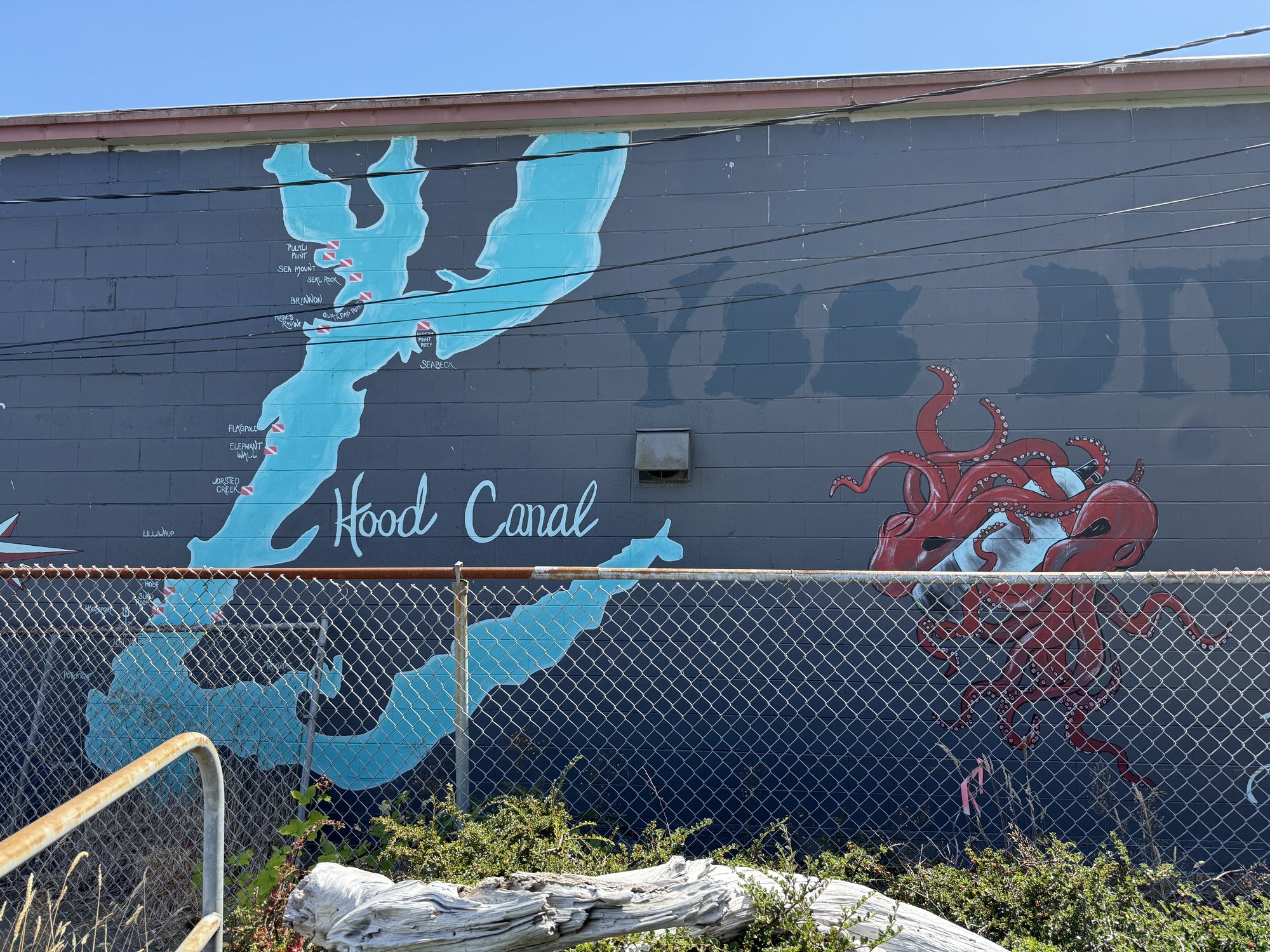
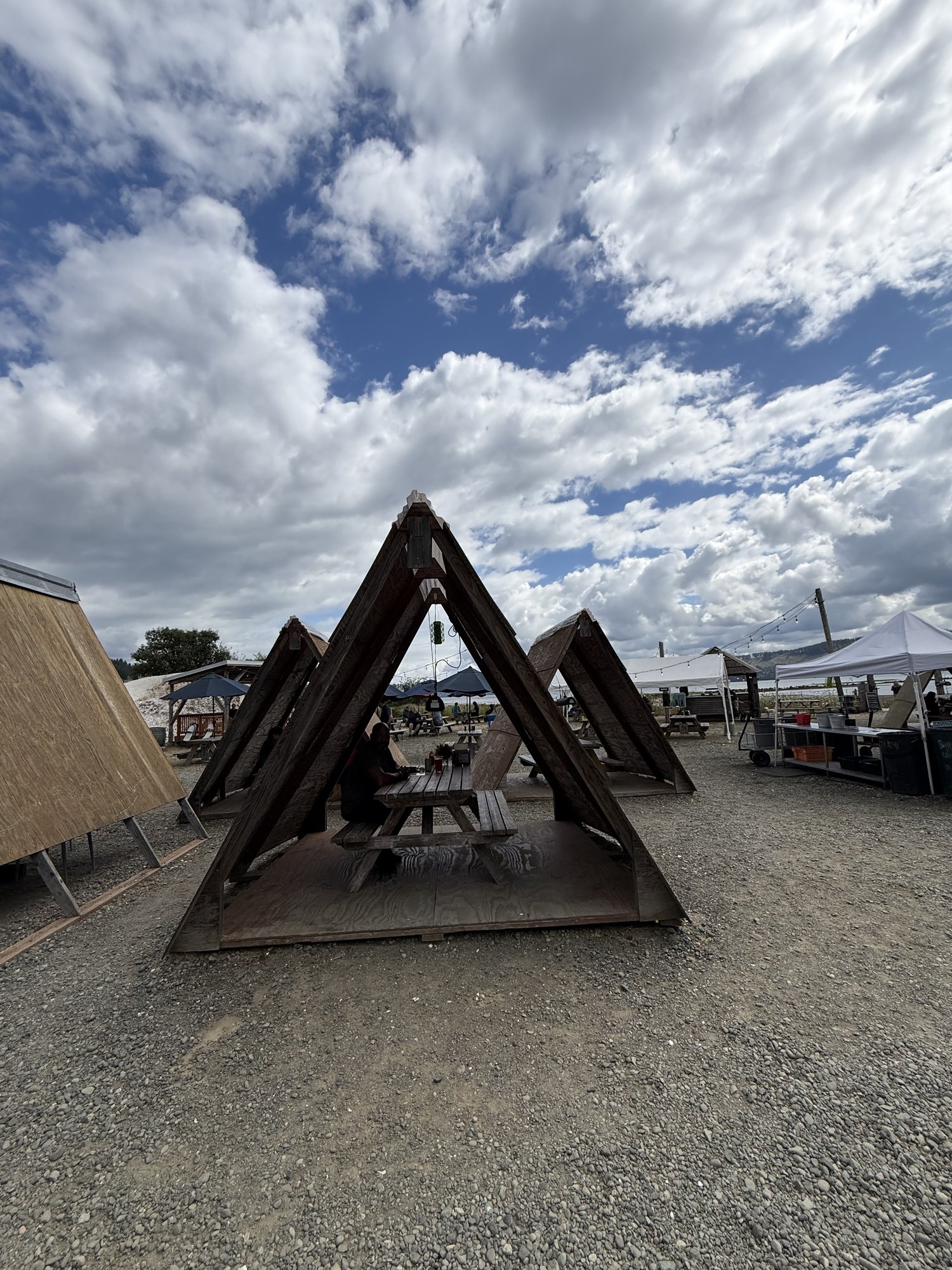
After five hours on Mount Ellinor, sitting down at a picnic table by the water with a plate of them in front of me was about the most reasonable thing I’ve ever done.
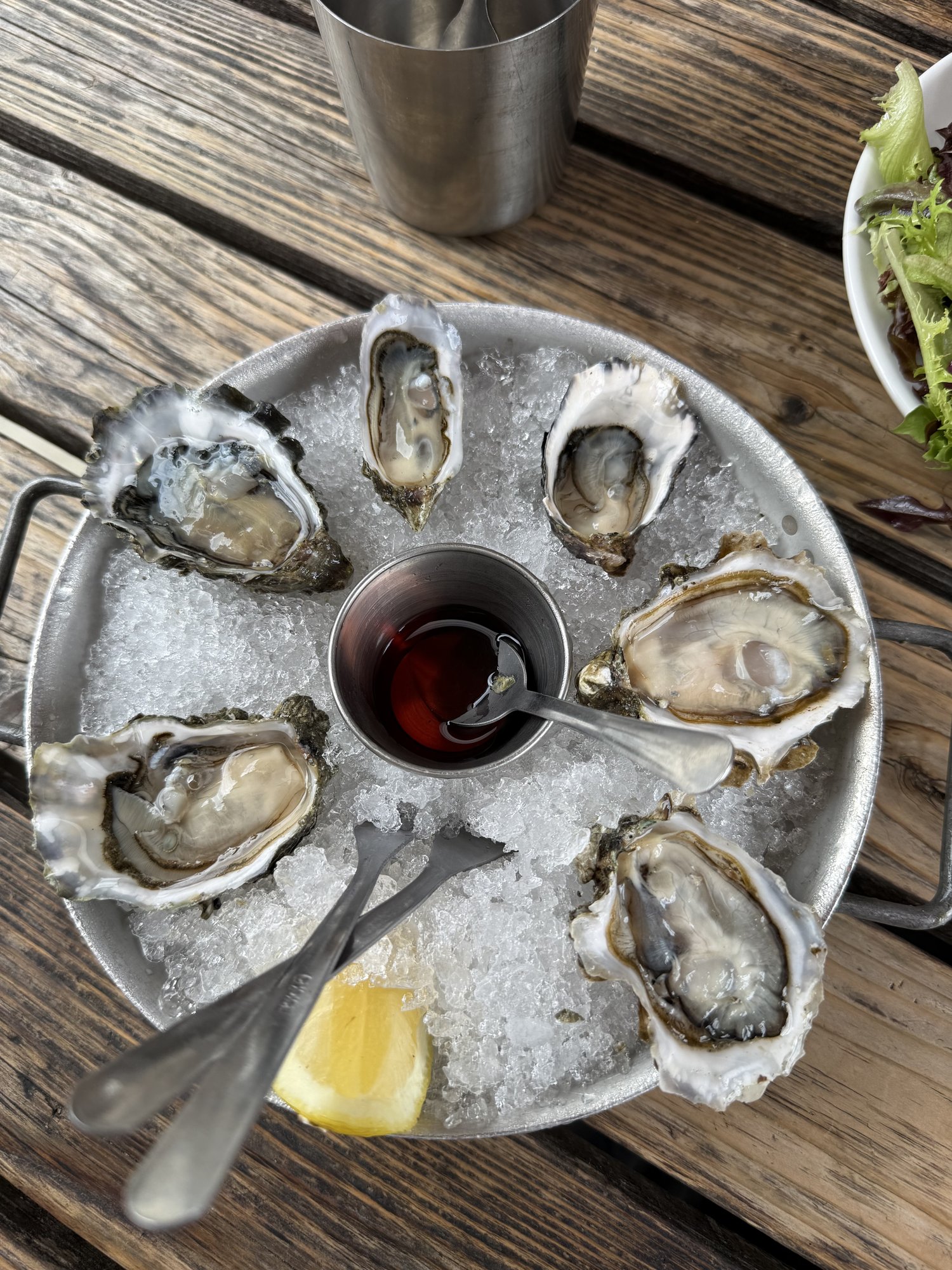
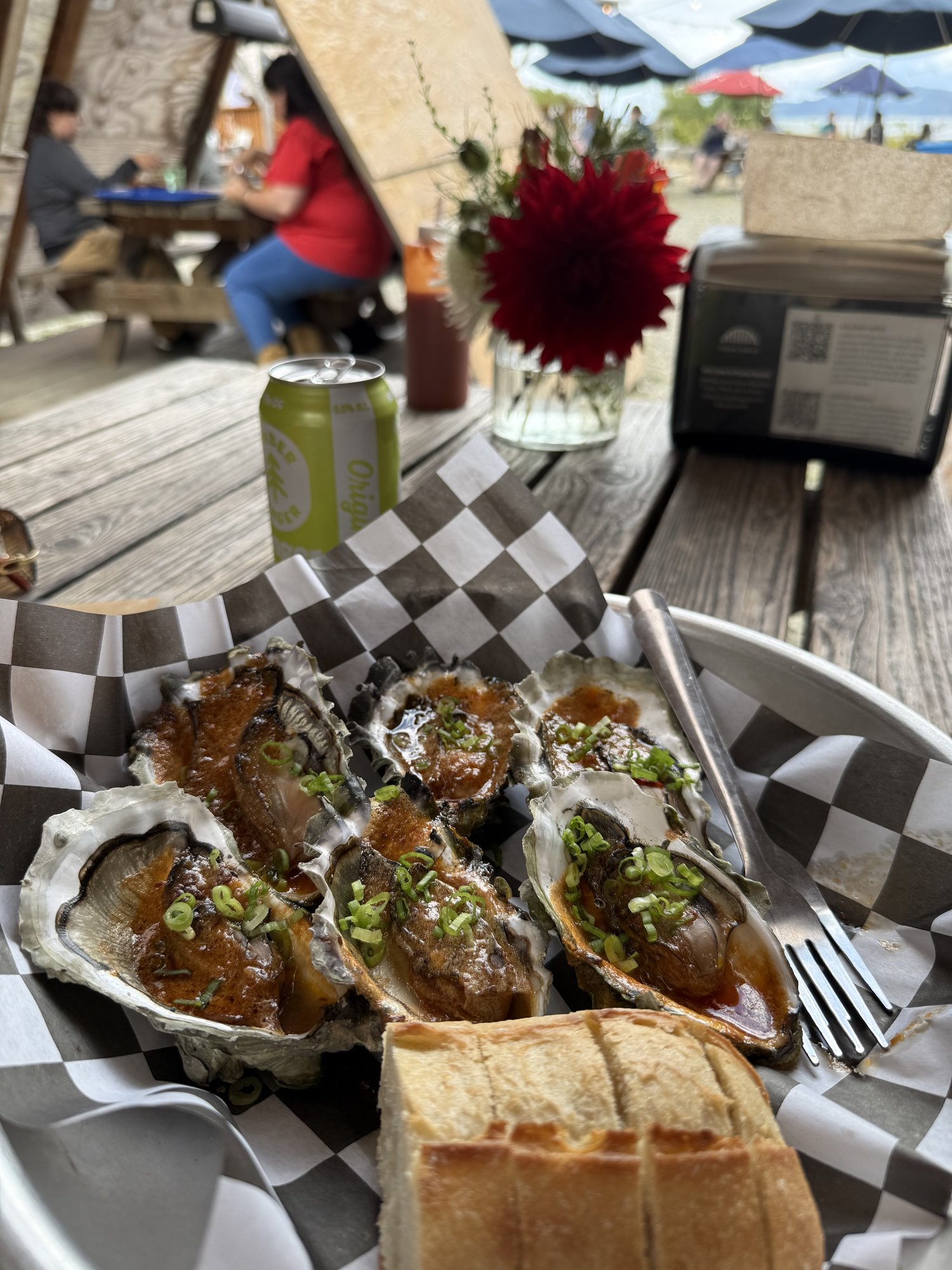
We had them raw first and then grilled, and if you’ve never had them grilled it’s worth the trip on its own — hot and buttery and garlicky, with bread to mop out the shell.
If you run this race, stay the night instead of driving home. The whole trip is better than the race by itself, and the race is already good.
Would I Do It Again
No. I don’t think I’ll sign up for this one a second time.
I love mountain races, but most of the ones I love roll a bit — they give you a flat stretch or a gentle bit where you can settle into a rhythm and get something back before the next climb. The Beast doesn’t do that. It’s one long way up and one long way down, and that means the descent is just as relentless as the climb, on quads that have already been emptied out getting to the top. My legs need to be a lot stronger before that’s something I can enjoy rather than survive.
That’s not a criticism of the race. It’s a good race and it’s honest about what it is, which is right there in the name.
And I’d still tell you to go. It’s a beautiful piece of the Olympics, the summit is worth standing on even in the clouds, and the weekend around it is lovely, especially if you like oysters. Just turn up with stronger legs than I had.
I got to stand on a start line with athletes I’d otherwise only read about, watch them warm up for a race that scared me, and then climb the same mountain they climbed, slower and in the same clouds. Fifty-one of us started up Ellinor and fifty-one of us came back down, and I was tearing up at the bottom of it, which tells you it mattered.
Cheers to mountain races, and to the oysters that come after them. 🥂